
Can You Recover From Addiction on Your Own?
Why Support Makes a Difference
Can you recover from addiction without help? Learn why connection, community, professional support, and lived experience often strengthen long-term recovery and lasting well-being.
It’s one of the most common questions people ask themselves before they ever speak to a counsellor or tell someone they’re struggling.
“Shouldn’t I be able to do this myself?”
The question often comes long before someone starts looking for treatment. It grows quietly alongside self-doubt, guilt, and the hope that tomorrow will somehow be different.
Most of us are raised to value independence. We solve problems ourselves, work harder when life becomes difficult, and try not to inconvenience other people. When alcohol or drug use begins causing problems, asking for help can feel like admitting failure rather than taking a healthy step forward.
Yet very few meaningful life changes happen entirely alone.
Learning a new profession, raising children, recovering from illness, training for a marathon, or rebuilding after a loss all tend to involve guidance, encouragement, and relationships that help us keep moving when motivation fades.
Recovery is no different.
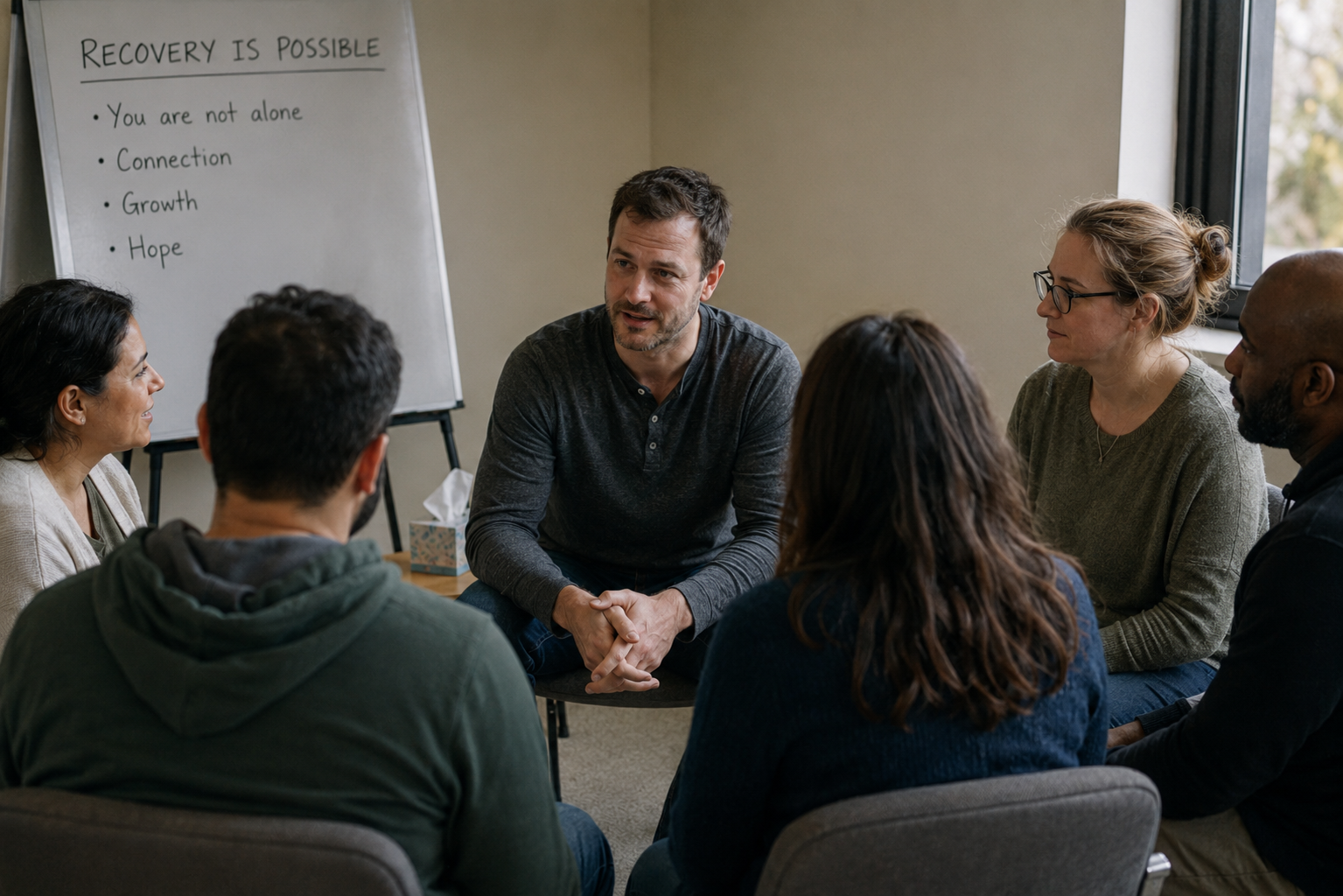
Can Someone Recover Without Support?
Some people do.
At the same time, decades of research have consistently shown that people with strong social support tend to experience better long-term recovery outcomes than those who remain isolated.
That support can take many forms. It may come from healthcare professionals, family members, trusted friends, peer groups, recovery communities, physicians, recovery coaches, or a combination of different resources working together.
The important question isn’t whether recovery can happen alone.
It’s whether carrying everything alone gives you the best opportunity to succeed.
Why Addiction Often Leads to Isolation
Long before someone stops using alcohol or other drugs, life often begins getting smaller.
Phone calls go unanswered. Invitations become easier to decline. Hobbies disappear. Relationships become strained. Even people surrounded by family or coworkers can feel profoundly alone because they’re carrying experiences they believe no one else will understand.
Isolation rarely creates recovery. More often, it creates the conditions where unhealthy patterns continue unnoticed.
Recovery, by contrast, often asks people to rebuild several parts of life at once. They may be learning healthier ways to manage stress, regulate emotions, strengthen relationships, establish routines, and respond differently to cravings while also rediscovering who they are without substances.
That’s a tremendous amount for anyone to navigate without support.
What Does Recovery Support Actually Look Like?
Support isn’t one thing.
A physician may help manage withdrawal or other medical concerns. A counsellor can explore the thoughts, emotions, experiences, and behaviours connected to substance use. Family members often play an important role by learning healthier communication and boundaries. Community programs provide opportunities to continue learning and practising new skills.
Peer support offers something different again.
There is comfort in meeting someone who remembers what those early days felt like. Not because their story is identical to yours, but because they understand the uncertainty, the setbacks, and the possibility that life can gradually become something different.
Each relationship contributes something unique.
Recovery often becomes strongest when those different forms of support work together.
Why Does Lived Experience Matter?
There are some things that cannot be learned from a textbook alone.
People who have experienced addiction and recovery firsthand often recognize emotions, fears, and practical challenges that others might overlook. They cannot tell someone exactly what their recovery will look like, but they can often reassure them that confusion, uncertainty, and gradual progress are all normal parts of change.
That perspective can reduce something many people experience early in recovery: the belief that they are uniquely broken or alone.
Lived experience and professional education are not competing ideas.
When combined thoughtfully, they can complement one another by bringing together clinical knowledge, practical wisdom, empathy, and hope.
Why Community Matters
Human beings learn through relationships.
We observe how other people solve problems, recover from setbacks, communicate under stress, and continue growing when life becomes difficult. Recovery communities create opportunities to witness those experiences in real time.
They also remind people of something they may have forgotten.
A fulfilling life doesn’t begin after recovery. It begins during it.
Healthy recovery communities aren’t designed to become someone’s entire world forever. Their purpose is to help people rebuild confidence, develop meaningful relationships, and gradually reconnect with family, work, recreation, and the broader community.
Connection becomes a bridge back to everyday life.
Doesn’t Recovery Still Depend on Me?
Absolutely.
Support doesn’t replace personal responsibility.
Nobody else can attend counselling on your behalf, make daily choices for you, or sustain your recovery without your participation. Lasting change still requires honesty, commitment, curiosity, and consistent effort.
Support simply makes that work less lonely.
Elite athletes have coaches. Musicians continue learning from teachers throughout their careers. Business leaders seek mentors. Seeking guidance isn’t a sign of weakness. It’s one of the ways human beings learn complex skills more effectively.
Recovery deserves the same perspective.
What If Support Didn’t Help Last Time?
Not every recovery experience feels like the right fit.
Some people leave a support group convinced recovery groups aren’t for them. Others don’t connect with their first counsellor or discover that a particular treatment approach doesn’t match how they learn.
That doesn’t necessarily mean support has failed.
It may simply mean a different combination of services would be more helpful.
Recovery isn’t about forcing yourself into an approach that doesn’t fit. It’s about finding people, programs, and resources that encourage continued growth while respecting your individual needs and circumstances.
Frequently Asked Questions
Can someone recover from addiction without help?
Some people do. However, research consistently shows that strong social support is associated with better long-term recovery outcomes. Many people benefit from combining professional care with supportive relationships and community resources.
Why are recovery groups helpful?
Recovery groups reduce isolation, provide opportunities to learn from others, encourage accountability, and remind people that lasting change is possible. Different groups offer different approaches, allowing individuals to find a community that feels like the right fit.
Do I have to speak in a recovery group?
No. Many groups welcome people who prefer to listen before participating. Everyone moves at their own pace, and expectations vary between different recovery communities.
Is counselling enough on its own?
Counselling can play an essential role in recovery. Many people also benefit from practising new skills, building supportive relationships, and participating in community-based recovery alongside professional care.
Recovery Becomes Stronger Through Connection
Recovery is deeply personal, but it was never meant to be carried entirely alone.
Whether support comes from healthcare professionals, family members, peer communities, physicians, counsellors, or trusted friends, each relationship has the potential to strengthen the foundation someone is building. Different people need different kinds of support, and those needs often change over time.
If you’re unsure what type of support would be most helpful, speaking with a qualified addiction professional can help you better understand the options available and determine the level of care that best fits your circumstances. For individuals whose needs are appropriate for outpatient treatment, programs such as those offered at EPIC Recovery may be one part of a broader network of recovery supports available within the community.
Wondering If the Recovery Weekend Program Is Right for You?
Recovery looks different for everyone. EPIC Recovery's confidential Recovery Weekend Program Self-Screener is designed to help you consider whether our community-based outpatient program may be an appropriate fit for your current circumstances.
Completing the self-screener takes about five minutes and is simply one way to begin exploring your options.
If you're looking for residential treatment, withdrawal management, medical care, or publicly funded addiction services, ConnexOntario can help you explore treatment options and services available across Ontario.